
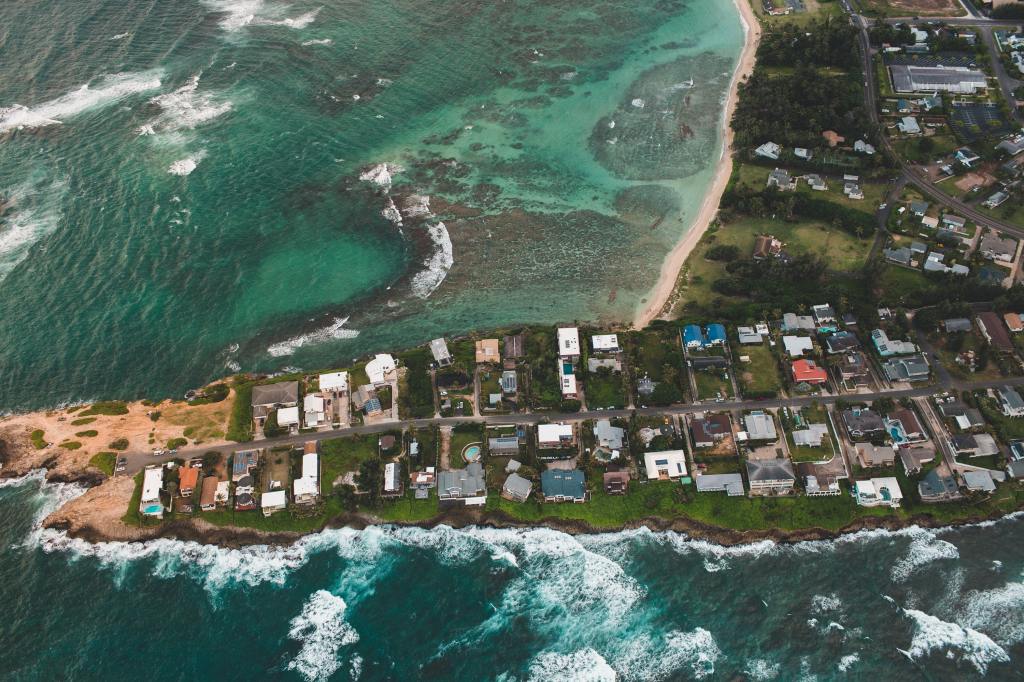
As the impacts of climate change become increasingly severe, homeowners across the country are beginning to feel the effects on their property values. In coastal areas, rising sea levels and more frequent and intense storms are already causing flooding and erosion, while in the West, droughts and wildfires are becoming more frequent and severe.
A recent study by the Union of Concerned Scientists found that nearly 2 million homes in the United States are at risk of chronic flooding by 2100, with a projected loss of $1 trillion in property value. This risk is particularly high in low-lying areas along the East and Gulf coasts, as well as in parts of California.
As the risks become clearer, home buyers and investors are starting to take notice. In some areas, property values have already started to decline. In Miami, for example, a study by the University of Miami found that single-family homes exposed to sea level rise are selling at a 7% discount compared to similar properties that are not exposed.
But it’s not just coastal areas that are feeling the impact of climate change. In the West, prolonged droughts and wildfires are threatening property values as well. A study by the University of California, Berkeley found that homes within 1,000 feet of a wildfire burn zone lost an average of 10% of their value.
The impacts of climate change on property values are not just a concern for homeowners, but for entire communities. As property values decline, so do property tax revenues, which can have serious implications for local governments. In addition, declining property values can make it more difficult for homeowners to sell their homes or refinance their mortgages, putting them at risk of foreclosure.
But how to know if you are at risk? Flood maps and weather patterns are changing, exposing homeowners and businesses to enhanced levels of risk that were previously unexpected. That is where proper and more frequent updated forecasting is key to take into account the recency bias of these new patterns and to re-forecast the potential risk.
So what can be done once the risk has been identified and what can homeowners do to protect their property values in the face of climate change? One option is to invest in measures that can mitigate the risks, such as elevating homes in flood-prone areas, retrofitting buildings to be more resilient to storms, or installing fire-resistant landscaping in wildfire-prone areas.
Ultimately, the impacts of climate change on property values are a stark reminder of the urgent need to address this global crisis. As the risks continue to mount, homeowners and communities must work together to take action and protect their homes, and the planet for future generations.
“Battered by Hurricane Sandy, Bought by New York and for Sale for a Song”

 Climate Tech Blog